
"annual average"
2000 article(s) found

Introduction to the flavor and taste characteristics of Salvadoran coffee manor with excellent thickness and greasy feeling
El Salvador's domestic topography is mainly mountainous, plateau, volcanic, known as the country of volcanoes, Santa Ana active volcano 2385 meters above sea level, the highest peak in the country; the northern part of the country is the Lompa Valley and the southern part is the narrow coastal plain. Climatic characteristics all over El Salvador has a tropical climate, with an annual average temperature of 28 ℃; dry season from November to April and rainy season from May to October; coastal and lowland atmosphere
The flavor and taste of the three major coffee producing areas in Pu'er, Lincang, Baoshan, Yunnan Province, which is the best producing area of Yunnan small-grain coffee?
Follow the caf é (official Wechat account vdailycom) and found that the coffee bean-producing areas in Yunnan are basically the same as the tea-producing areas in Yunnan, mainly in Xishuangbanna, Pu'er, Lancang, Baoshan and Dehong. Coffee and rubber from Yunnan are introduced at the same time.

Costa Rican Coffee processing Plant Costa Rican Coffee from Tarazu Coffee production area
Costa Rican coffee cultivation was introduced by Cuba in 1779 and exported for the first time in 1820. There are about 32000 coffee farmers, with an average planting area of less than one hectare (10000 hectares) per farmer. Costa Rica has a population of 41 billion (2006), with a coffee planting area of 82500 hectares and an annual production of 1.7 million bags (60kgs per bag). The annual domestic consumption is 380000 bags.
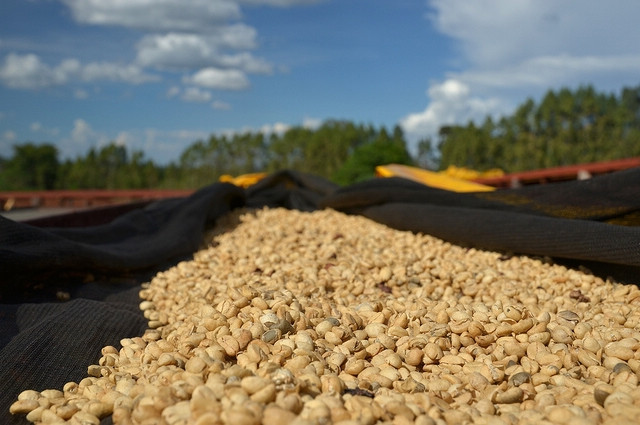
Royal Coffee processing Plant in St. Roman, a country grown in Central America, Tarazu, Costa Rica.
Costa Rican coffee cultivation was introduced by Cuba in 1779 and exported for the first time in 1820. There are about 32000 coffee farmers, with an average planting area of less than one hectare (10000 hectares) per farmer. Costa Rica has a population of 41 billion (2006), with a coffee planting area of 82500 hectares and an annual production of 1.7 million bags (60kgs per bag). The annual domestic consumption is 380000 bags.

Ethiopian coffee flavor manor area with nut flavor
In Ethiopia, the grading and quality control system of coffee is divided into three levels: producer, regional and national. All coffee is inspected by local inspection agencies before leaving the country of origin, and then re-tested at the coffee inspection and grading centers in Addis and Diredawa to determine its quality grade. Coffee is graded before auction and sale, for all involved in production, acquisition,

Introduction to the coffee producing area of Yega Shifeiwo, Ethiopia
Following caf é comments (Wechat official account vdailycom) found that Jie Jia Xuefei, a beautiful cafe, opened a small shop of its own, a small town in Ethiopia, 1700-2100 meters above sea level, located in the northwest of Sidamo province, surrounded by mountains and lakes, one of the highest coffee-producing areas in Ethiopia and synonymous with Ethiopian boutique coffee. Strictly speaking, Yega Xuefei is a

Ethiopian Coffee Flavor with acidity and texture introduction to the characteristics of Fine Coffee beans in Manor area
Ethiopian people are addicted to coffee. In 2003, domestic consumption accounted for 42.3% of the total output, with a per capita consumption of 3 kg. But more than half of the coffee produced each year is used for export to earn foreign exchange. The main exporters include the United States, Italy, the United Kingdom, Sweden, Norway, Greece, France, Belgium, Germany and Australia. Before 1974, the right to produce, process and trade coffee was controlled by

The relationship between Kenyan coffee and Arabica coffee beans
In Ethiopia, the grading and quality control system of coffee is divided into three levels: producer, regional and national. All coffee is inspected by local inspection agencies before leaving the country of origin, and then re-tested at the coffee inspection and grading centers in Addis and Diredawa to determine its quality grade. Coffee is graded before auction and sale, for all involved in production, acquisition,

Looking forward to the development trend of coffee in China
1. Great potential for the development of the domestic coffee market after China's entry into WTO, China's economy is developing rapidly, people's living standards are constantly improving, and coffee is being accepted by more and more Chinese. Coffee is no longer just a drink, it is gradually closely linked with fashion and taste, or make friends and talk, or business talks, or leisure, in a cup of coffee filled with music.

Introduction to the Flavor characteristics of Ethiopian Yega Xuefei Coffee
In Ethiopia, the grading and quality control system of coffee is divided into three levels: producer, regional and national. All coffee is inspected by local inspection agencies before leaving the country of origin, and then re-tested at the coffee inspection and grading centers in Addis and Diredawa to determine its quality grade. Coffee is graded before auction and sale, for all involved in production, acquisition,

Costa Rican boutique coffee producing area introduces Costa Rican coffee flavor and characteristic Tarazhu coffee
Costa Rican coffee cultivation was introduced by Cuba in 1779 and exported for the first time in 1820. There are about 32000 coffee farmers, with an average planting area of less than one hectare (10000 hectares) per farmer. Costa Rica has a population of 41 billion (2006), with a coffee planting area of 82500 hectares and an annual production of 1.7 million bags (60kgs per bag). The annual domestic consumption is 380000 bags.

An introduction to the characteristics of Ethiopian Coffee Flavor Manor
In Ethiopia, the grading and quality control system of coffee is divided into three levels: producer, regional and national. All coffee is inspected by local inspection agencies before leaving the country of origin, and then re-tested at the coffee inspection and grading centers in Addis and Diredawa to determine its quality grade. Coffee is graded before auction and sale, for all involved in production, acquisition,

Introduction to the grading of Ethiopian Coffee
Sun-cured coffee accounts for 65% of exports. Mainly picked by families, red coffee beans are placed on cement floors or on high tables to dry to about 11.5% humidity, then peeled and cleaned. Coffee grading and quality control system in Ethiopia, coffee grading and quality control system is divided into three levels: producer, regional and national. All coffee is required before leaving the country of origin.

A resounding, unforgettable Costa Rican Fire Phoenix Manor Coffee Flavor Taste Features
Costa Rica's climatic conditions are completely different, completely reversing the classification of the four seasons of the year. There are only two seasons here, from April to December, the rainy season, and the dry season from the end of December to the following April, also known as summer. Average annual temperatures range from 15 ° C to 26 ° C in San Jose, the capital; temperatures are relatively high along the coast and average overnight temperatures in the Caribbean are 2 ° C.

Introduction of Ethiopian Coffee Bean varieties in Ethiopian Coffee Flavor Manor
In Ethiopia, the grading and quality control system of coffee is divided into three levels: producer, regional and national. All coffee is inspected by local inspection agencies before leaving the country of origin, and then re-tested at the coffee inspection and grading centers in Addis and Diredawa to determine its quality grade. Coffee is graded before auction and sale, for all involved in production, acquisition,

The long aftertaste of Ethiopian coffee introduces the characteristics of Ethiopian coffee.
In Ethiopia, the grading and quality control system of coffee is divided into three levels: producer, regional and national. All coffee is inspected by local inspection agencies before leaving the country of origin, and then re-tested at the coffee inspection and grading centers in Addis and Diredawa to determine its quality grade. Coffee is graded before auction and sale, for all involved in production, acquisition,

What are the characteristics of African coffee? Is the African coffee good?
Professional coffee knowledge exchange more information about coffee beans Please follow the coffee workshop (Wechat official account cafe_style) Coffee producing areas in Africa the first coffee tree in the world was found in the Horn of Africa. Local tribes often grind the fruit of coffee and knead it with animal fat to make many ball-shaped balls. These aboriginal tribes put these coffee balls

The dispute between different levels of flavor in the coffee bean producing areas of Honduras in Central America
Professional coffee knowledge exchange more coffee bean information please follow the coffee workshop (Wechat official account cafe_style) front street-Honduras coffee producing area Honduras has complex terrain and diversified climate. Located in the coastal plain of Central America, it has a tropical rain forest climate, with an average annual temperature of 31 ℃. The mountain belongs to subtropical forest climate, the annual average temperature is 23 ℃, the rainy season is from June to November, the temperature is mild and rainy.

The present situation of Coffee Development-- International comparison of Coffee consumption and drinking structure
From the perspective of coffee drinking structure, globally, ground coffee accounts for more than 87% of the total coffee consumption, while instant coffee accounts for less than 13%. In China, instant coffee is the largest segment of the coffee consumption market, accounting for 84% of the market share. The market share of freshly ground coffee is only about 16%. From the above data and facts, we can see that chain brand management is coffee.
A brief introduction to the Market Price of Fine Coffee Bean varieties in the wild-tasting Shaqisuo area
Harald Coffee this coffee grows in areas ranging from 900m in the Darolebu plain to 2700 m in the highland mountain range of Chercher in eastern Ethiopia. These mountains do provide unique characteristics for these perennial coffee beans: the fruit is full and long, moderately acidic, and the typical mocha is refreshing.